Are tight cable bends putting your project at risk—and your budget on the line?
When a кабель is bent too sharply, copper strands can micro-fracture, insulation can craze, and shielding can deform—leading to heat buildup, signal loss, and premature failure. That means downtime, rework, and failed inspections. The fix is simple: design and install to the correct радиуса изгиба кабеля. As a China-based Производитель и Оптовый продавец of up to 500 kV power кабель, QRUNNING предлагает Customisable constructions, OEM/ODM support, testable certificates, and reliable lead times from 10 production lines (200 million meters capacity). We help buyers and contractors in Vietnam and beyond get the spec—and the performance—right the first time.
Сайт радиуса изгиба кабеля is the smallest curve a кабель can safely form without damage. Respecting it preserves electrical integrity, eases installation, and prevents costly failures, inspections issues, and warranty claims.
Read on for clear formulas, real-world use cases, practical rules from standards like the NEC, and sourcing tips from a proven Поставщик.
How To Calculate The Bending Radius Of Cable
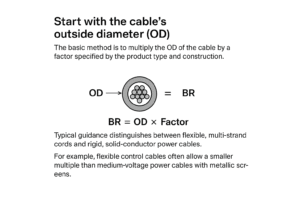
Start with the cable’s outside diameter (OD)
The basic method is to multiply the OD of the кабель by a factor specified by the product type and construction. Typical guidance distinguishes between flexible, multi-strand cords and rigid, solid-conductor power cables. For example, flexible control cables often allow a smaller multiple than medium-voltage power cables with metallic screens. Always check the manufacturer’s datasheet; if a range is given (e.g., static vs. dynamic), use the stricter value during installation to avoid over-bending at pull points.
Static vs. dynamic applications
Static bend radius применяется один раз, когда кабель установлен и не движется; динамический радиус изгиба применяется, когда кабель сгибается во время работы. Динамические факторы обычно больше, потому что циклическое движение ускоряет усталость. При натяжении используйте большие диаметры шкивов и радиусы входа, и направляйте кабель так, чтобы изгиб происходил постепенно — а не на одном резком крае.
Пример рабочего процесса
1) Определите внешний диаметр кабеля по техническому паспорту. 2) Определите множитель для установки и для эксплуатации (статический/динамический). 3) Рассчитайте Минимальный радиус изгиба = OD × Множитель.. 4) Убедитесь, что углы лотков, изгибы труб, диаметры барабанов и комплекты для подключения превышают этот радиус. 5) Задокументируйте значение в вашем методическом заявлении, чтобы бригады могли измерить на месте с помощью шаблона радиуса или измерительной ленты.
Где используются кабели с малым радиусом изгиба?
Компактные пространства, которые все еще требуют надежности
Отрасли часто требуют меньшие шкафы и более плотную прокладку. Робототехника, станки, лифты и движущиеся подъемники требуют кабелей, которые могут проходить узкие пути, выживая при постоянном движении. В центрах обработки данных и оригинальном оборудовании высокий показатель ввода/вывода заставляет использовать малые радиусы изгиба за дверями и в кабельных каналах. Здесь выбор конструкций, предназначенных для более узких изгибов — тонкосеченные проводники, подходящая изоляция, оптимизированная экранировка и прочные наружные оболочки — поддерживает стабильную работу без прибегания к объемным упаковкам.
Реальность установки на строительных площадках
На строительстве изгибы накапливаются на поворотах лотков, восходящих трубах и вводных гландах. Использование одобренных производством аксессуаров (изгибы, подставки, ролики) предотвращает перекрытия. Для проектов по электроснабжению на развивающихся рынках — наших основных экспортных направлениях — логистика иногда диктует использование меньших барабанов или ручной обработка; планирование радиуса изгиба кабеля вместе с размером барабана и маршрутом натяжения избегает поля для импровизации, что может повредить изоляцию и аннулировать гарантии. QRUNNING предоставляет рекомендации по барабанам и плану натяжки с каждой крупной поставкой, чтобы помочь вашей команде поддерживать правильный радиус от выгрузки до окончания.
Важность соблюдения спецификаций радиуса изгиба
Электрические, механические и последствия соблюдения норм
Слишком сильный изгиб может ослабить изоляцию на наружной дуге и сжать ее на внутренней дуге, изменяя положение проводника и увеличивая местное электрическое напряжение — особенно критично при высоких напряжениях. Механически, повторяющиеся узкие изгибы нагружают медь или алюминий, вызывая их упрочнение и окончательное разрушение проводника. Для инструментов и данных искаженная геометрия изменяет импеданс, увеличивает перекрестные помехи и деградирует экранирование, что приводит к прерывистым сбоям, которые сложно диагностировать. С точки зрения соблюдения норм проверки сосредоточены на качестве выполнения: игнорирование указанного радиуса может вызвать повторную работу, задержки в расписании или неудачные тесты приемки.
Влияние на закупки и гарантии
Спецификации часто фиксируют минимальный радиус в заказе на покупку. Если установщики превышают лимиты, ответственность может переходить между подрядчиком и поставщиком. Как опытный Поставщик и Производитель, мы встраиваем минимальный радиус изгиба в наши технические паспорта и ярлыки на ящиках, и можем адаптировать Customisable конструкции — классы жил, дизайн экранов или состав укладки — чтобы соответствовать вашим требованиям к маршрутизации, не жертвуя сроком службы. Этот баланс защищает как ваш бюджет, так и репутацию вашего проекта.
Какой код NEC для радиуса изгиба провода?
Как NEC подходит к изгибам
Сайт NEC (Национальный электрический код) касается двух связанных идей. Во-первых, он требует достаточное пространство для изгиба провода в шкафах, панельных щитах и оболочках, чтобы проводники могли входить и завершаться без резкой деформации; эти статьи предписывают минимальные зазоры в зависимости от размера проводника и рейтинга оборудования. Во-вторых, для кабелей и проводников NEC ожидает, что установщики будут следовать указанному производителем минимальному радиусу изгиба и любым спискам оборудования или стандартам продукта, которые применимы (например, для средневолательных аксессуаров или систем лотков). На практике это означает: подбирайте свои оболочки согласно таблицам NEC, выбирайте фитинги, совместимые с размерами ваших проводников, и никогда не заставляйте кабель находиться ниже радиуса, указанного производителем.
Практические выводы для подрядчиков и покупателей
Во время проектирования убедитесь, что выбранные вами свипы для труб, повороты кабельных лотков и комплекты завершения превышают требуемый радиус изгиба. Во время установки используйте ролики или шкивы достатнего диаметра и защищайте края радиусными подкладками. Для инспекции имейте при себе технические листы, чтобы показать органу, имеющему юрисдикцию, что ваши изгибы соответствуют как NEC’правилам пространства, так и спецификации радиуса изгиба продукта. QRUNNING может предоставить письма о соответствии и данные испытаний по запросу для ускорения одобрений.
Составление списка кабелей, соответствующих требованиям радиуса изгиба
Почему QRUNNING подходит проектам во Вьетнаме и за его пределами
Как B2B Оптовый продавец и Производитель с более чем 30-летним опытом, мы поставляем до 500 кВ электроэнергии кабель с аудированной системой контроля качества, подлинной сертификацией и надежными ETD/ETA. 10 линий нашего завода поддерживают крупные заказы с стабильными сроками выполнения, а наша инженерная команда поможет вам сбалансировать радиус изгиба, токопроводность и бюджет. Нужен более плотный маршрут? Спросите о Customisable классах жил, вариантах брони и материалах оболочки, которые достигают вашей цели радиуса изгиба кабеля без жертвы ожидаемой долговечности.
Резюме
Уважайте радиуса изгиба кабеля для защиты производительности, прохождения инспекций и предотвращения простоя. Выбирайте конструкции, соответствующие вашей маршрутизации, следуйте NEC и ограничения производителя, и партнер с проверенной репутацией Поставщик для надежных результатов.