• Главная
  • О нас
  • Продукция
    • Низковольтный кабель
      • Изолированный XLPE
      • ПВХ изоляция
      • Изолированный полиэтилен
      • Другие изолированные
    • Кабель среднего напряжения
      • Одножильный кабель
      • Кабель с тремя жилами
    • Высоковольтный кабель
      • 230 кВ - 800 кВ
      • 35 кВ - 230 кВ
    • Кабель управления
      • Кабель управления с изоляцией XLPE
      • Кабель управления с ПВХ изоляцией
    • Бронированный кабель
      • Кабель бронированный стальной лентой (STA)
      • Бронированный стальной проволокой кабель (SWA)
      • Кабель с немагнитной металлической лентой
      • Немагнитный металлический бронированный кабель
    • Накладной кабель/кабель АВС
      • Низковольтный кабель ABC
      • Кабель АВС среднего напряжения
    • Кабель для возобновляемых источников энергии
      • Кабель для солнечной/электрической/ветровой энергии
      • Кабель EV
    • Пожарный кабель
      • Огнестойкий кабель
      • Огнестойкий кабель
      • Огнестойкие и огнестойкие кабели
    • Голый проводник
      • Алюминиевый проводник
      • Медный проводник
    • Морской кабель
  • История успеха
  • Поддержка
    • Скачать
    • Новости и события
    • Технический центр
  • Связаться с
  • ru_RUРусский
    • en_USEnglish
    • es_ESEspañol
    • fr_FRFrançais
    • de_DEDeutsch
Получить цитату

    chloe@qrunning.com

    Быстрая помощь: Свяжитесь с одним из наших экспертов, и мы свяжемся с вами в течение 24 часов!

    Qrunning
    Технический центр
    DIY Cable Installation Tool Alternatives (Emergency Scenarios)

    DIY Cable Installation Tool Alternatives (Emergency Scenarios)

    05/12/2025

    Emergency Cable Installation Scenarios and Temporary Material Alternatives

    In emergency conditions—such as power outages, post-disaster recovery, remote-site equipment failure, or a sudden breakdown during installation—standard tools like crimping pliers, insulation strippers, or cable testers may not be available. Under such circumstances, alternative materials and creative methods become vital for continuity and safety.

    For instance, when crimping pliers are unavailable, insulated connectors or terminals can sometimes be tightly secured using strong needle-nose pliers or a vise-grip wrench, with the aid of electrical tape to maintain pressure and insulation. In more extreme cases, stripped wire ends can be twisted together tightly, soldered using a portable torch or lighter (if solder is available), and insulated using heat-shrink tubing (pre-cut beforehand) or layers of high-grade electrical tape.

    If cable stripping tools are missing, a utility knife or precision blade can be used with caution to avoid nicking the conductor. A makeshift continuity test can be done using a household battery, LED, and wire. Connect one end of the circuit to the battery and the other through the LED—if the LED lights up, continuity is confirmed.

    To temporarily fasten cables along walls or structures, zip ties, duct tape, or even nylon string can be used to prevent cable movement. For moisture protection, plastic bags and electrical tape can be layered to form a basic seal over connections. All such measures are temporary and require eventual replacement, but they can restore function quickly and safely under pressure.
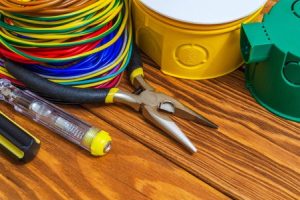
    DIY Cable Installation Tool Alternatives (Emergency Scenarios) 1

    DIY Electrical Safety Principles

    Safety must remain a top priority, even during improvised installations. Always disconnect power before working on any cable. Insulate every exposed conductor with reliable, non-conductive materials. Avoid loose connections, which can generate heat and cause fire. Keep cables off wet or metallic surfaces and ensure temporary fixes are labeled to indicate future repair is needed. Avoid overloading circuits and verify grounding wherever possible. Use insulated gloves and keep a fire extinguisher nearby.

    Post-Emergency Professional Maintenance

    Temporary solutions must be followed by professional inspection and maintenance. For example, a twisted wire connection may restore function briefly, but should later be replaced with proper terminals using calibrated tools. Moisture-prone joints must be resealed professionally to prevent corrosion. A certified electrician should test continuity, grounding, and insulation resistance once normal operations resume.

    Recommendations

    DIY alternatives can restore temporary function, but always plan for professional maintenance afterward. Use safe, proven substitutes and document all changes for later correction.
    Сопутствующие товары

    Аэродромный кабель с пучками проводов

    Кабель для передачи услуг 0,6/1 кВ с воздушным пучком проводников

    морской силовой кабель

    Морской силовой кабель 0,6/1 кВ

    Низковольтный кабель ПВХ

    Низковольтный кабель ПВХ 0,6/1 кВ

    Горный кабель

    Горный кабель 0,38/0,66 кВ

    Оглавление

    Toggle
    • Emergency Cable Installation Scenarios and Temporary Material Alternatives
    • DIY Electrical Safety Principles
    • Post-Emergency Professional Maintenance
    • Recommendations

    Главное меню

    • Главная
    • О нас
    • Продукция
    • История успеха
    • Поддержка
    • Связаться с
    • ru_RUРусский

    Продукция

    • Низковольтный кабель
    • Кабель среднего напряжения
    • Высоковольтный кабель
    • Кабель управления
    • Бронированный кабель
    • Накладной кабель/кабель АВС
    • Кабель для возобновляемых источников энергии
    • Пожарный кабель
    • Голый проводник

    Контакты

    Нинбо Qrunning Cable Co., Ltd.
    chloe@qrunning.com
    +86 17857441080
    No.99 Chenshan East Road, Xiaogang, Нинбо, Китай
    Facebook
    YouTube
    WhatsApp
    LinkedIn

    © 2024 Qrunning Все права защищены

    Этот сайт использует файлы cookie, чтобы улучшить ваши впечатления. Если вы продолжаете пользоваться этим сайтом, вы соглашаетесь с этим.