Je, kitu kuhusu kugeuza nyaya kali kinaweka mradi wako katika hatari—na bajeti yako katika hatari?
Wakati kebo imegeuzwa kwa ukali kupita kiasi, nyuzi za shaba zinaweza kuharibika, insulation inaweza kuanguka, na ulinzi unaweza kubadilika—kuletea kuungana kwa joto, kupoteza ishara, na kufeli kabla ya wakati. Hii inamaanisha wakati wa bila kazi, kazi tena, na ukaguzi usiofaulu. Suluhisho ni rahisi: panga na uweke kulingana na ukaaji wa nyaya.. Kama kampuni inayofanya kazi kutoka China, Mtengenezaji na Muuzaji jumla ya hadi 500 kV nguvu kebo, QRUNNING inatoa Inayoweza Kubinafsishwa miundo, msaada wa OEM/ODM, vyeti vya kupimika, na nyakati za kuaminika za uongozi kutoka kwenye mistari 10 ya uzalishaji (capaciti milioni 200). Tunawasaidia wanunuzi na wakandarasi nchini Vietnam na zaidi kupata spesifikesheni—na utendaji—sawa kwa mara ya kwanza.
The ukaaji wa nyaya. ni curve ndogo zaidi ambayo kebo inaweza kuunda salama bila uharibifu. Kuheshimu hili kunaweka uadilifu wa umeme, hurahisisha ufungaji, na kuzuia kufeli kwa gharama kubwa, matatizo ya ukaguzi, na madai ya dhamana.
Endelea kusoma kwa ajili ya fomula wazi, matukio halisi ya matumizi, na kanuni za vitendo kutoka viwango kama NEC, na vidokezo vya kununua kutoka kwa kampuni iliyothibitishwa. Mtoaji.
Jinsi ya Kuamua Ukaaji wa Nyaya
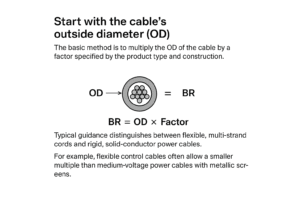
Anza na kipenyo cha nje cha nyaya (OD)
Mbinu ya msingi ni kuzidisha OD ya kebo kwa sababu ya kipengele kilichoainishwa na aina ya bidhaa na ujenzi. Mwongozo wa kawaida unafanya tofauti kati ya kebo za udhibiti zinazoweza kuhamasika, nyaya za nyuzi nyingi, na kebo za nguvu za kazi zisizotiwa. Kwa mfano, kebo za kudhibiti zinazoweza kuhamasika mara nyingi zinaruhusu kipimo kidogo zaidi kuliko kebo za nguvu za kati zenye skirini za metali. Kila wakati angalia daftari la mtengenezaji; ikiwa eneo linatolewa (mfano, static dhidi ya dynamic), tumia thamani kali zaidi wakati wa usakinishaji ili kuepuka kupinda zaidi kwenye vidokezo vya kuvuta.
Matumizi ya static dhidi ya dynamic
Radiu ya kupinda ya static inaanza mara baada ya kebo kuwekwa na si ikihama; Radiu ya kupinda ya dynamic inatumika wakati kebo inakunjwa wakati wa kufanya kazi. Sababu za dynamic mara nyingi huwa kubwa zaidi kwa sababu ya mwendo wa cyclical unaongeza uchovu. Wakati wa kuvuta, tumia kipimo cha kuingiza na sehemu kubwa, na mwongoze kebo ili kupinda kutokee hatua kwa hatua—sio kwa pembe kali moja tu.
Mfano wa mchakato wa haraka
1) Tambua OD ya kebo kutoka kwenye daftari. 2) Amua kipandikizi kwa usakinishaji na kwa huduma (static/dynamic). 3) Hesabu Radiu ya Minima ya Kupinda = OD × Kipandikizi.. 4) Thibitisha kwamba pembe za tray, mwingiliano wa conduit, vipimo vya ngoma, na vifaa vya kumaliza vyote vinaongeza hii radiu. 5) Andika thamani kwenye taarifa yako ya mbinu ili vikundi vya kazi viweze kupima kwenye tovuti kwa kutumia kigezo cha radiu au mkanda.
Kebeo zipi zenye radiu ya kupinda kali hutumiwa?
Nafasi za compact ambazo bado zinahitaji uaminifu
Sekta nyingi mara nyingi husisitiza kwa cabinets ndogo na utaratibu wenye msongamano. Roboti, zana za mashine, lifti, na gantries zinazohama zinahitaji kebo kuweza kupitia njia ngumu huku zikidumu katika mwendo wa mara kwa mara. Katika vituo vya data na mashine za OEM, idadi kubwa ya I/O inalazimisha pakiti ndogo za kupinda nyuma ya milango na katika njia za mvuto. Hapa, kuchagua ujenzi uliojaaliwa kwa ajili ya kupinda zaidi—vifaa vya nyuzi nyembamba, insulation inayofaa, ulinzi ulioboreshwa, na koti zenye nguvu—in保持 utendakazi kuwa thabiti bila kutegemea kisanduku kikubwa.
Uhalisia wa usakinishaji kwenye maeneo ya kazi
Katika ujenzi, kupinda kunakusanywa kwenye mzunguko wa tray, kupanda, na vichwa vya kuingilia. Kutumia vifaa vilivyothibitishwa na kiwanda (mwendo, makalio, rollers) kunaepusha kukunjika. Kwa miradi ya nguvu katika masoko ya maendeleo—maeneo yetu makuu ya usafirishaji—lojistiki mara nyingine hukusanya ngoma ndogo au usimamizi wa mikono; kupanga ukaaji wa nyaya. pamoja na ukubwa wa ngoma na njia ya kuvuta huondoa improvisation ya uwanjani ambayo inaweza kukata insulation na kufuta dhamana. QRUNNING inatoa mapendekezo ya mpango wa ngoma na kuvuta na kila usafirishaji mkubwa ili kusaidia timu yako kudumisha radiu sahihi kutoka kupakuliwa hadi kumaliza.
Umuhimu wa kufuata specifikation ya radiu ya kupinda
Matokeo ya umeme, mitambo, na kufuata
Kupinda zaidi kunaweza kupunguza insulation kwenye arc ya nje na kuikandamiza kwenye arc ya ndani, kubadilisha nafasi ya conductor na kuongeza msongamano wa umeme wa ndani—hasa muhimu kwenye voltages za juu. Kihandisi, kupinda mara kwa mara kunaweza kushika shaba au alumini, kusababisha ugumu na uharibifu wa mwisho wa conductor. Kwa ajili ya vifaa vya kupima na data, umbo lililobadilishwa hubadilisha impedance, huongeza crosstalk, na kuharibu ulinzi, na kusababisha makosa yasiyo ya kawaida ambayo ni ya gharama kubwa kutambua. Kutoka kwa mtazamo wa kufuata, ukaguzi unalenga kwenye kazi: kupuuza radiu iliyoainishwa kunaweza kusababisha kufanya kazi tena, ucheleweshaji wa ratiba, au majaribio ya kupokea yasiyofanikiwa.
Athari kwa manunuzi na udhamini
Maelezo ya kiufundi mara nyingi huweka radius ya chini kabisa katika agizo la ununuzi. Ikiwa wafungaji watazidi mipaka, uwajibikaji unaweza kuhamishwa kati ya mkandarasi na msambazaji. Kama mtaalamu aliyebobea Mtoaji na Mtengenezaji, tunaweka radius ya chini kabisa ya kupinda kwenye datasheet zetu na lebo za kreti, na tunaweza kubinafsisha Inayoweza Kubinafsishwa miundo—daraja la nyuzi, muundo wa skrini, au kiwanja cha koti—ili kukidhi vikwazo vyako vya uelekezaji bila kuathiri maisha ya huduma. Uwiano huu hulinda bajeti yako na sifa ya mradi wako.
Ni kanuni gani ya NEC kwa radius ya kupinda nyaya?
Jinsi NEC inavyoshughulikia mikunjo
The NEC (Kanuni ya Kitaifa ya Umeme) inashughulikia mawazo mawili yanayohusiana. Kwanza, inahitaji nafasi ya kutosha ya kupinda waya katika kabati, paneli za usambazaji, na vifuniko ili makondakta waweze kuingia na kuunganishwa bila kuharibika kwa mkunjo mkali; vifungu hivi huweka vibali vya chini kabisa kulingana na ukubwa wa kondakta na ukadiriaji wa kifaa. Pili, kwa nyaya na makondakta, NEC inatarajia wasakinishaji kufuata radius ya chini kabisa ya kupinda iliyobainishwa na mtengenezaji na orodha yoyote ya vifaa au kiwango cha bidhaa kinachotumika (kwa mfano, kwa vifaa vya voltage ya kati au mifumo ya tray). Kwa vitendo, hilo humaanisha: panga ukubwa wa enclosures zako kulingana na majedwali ya NEC, chagua fittings zinazooana na ukubwa wa kondakta zako, na kamwe usilazimishe kebo kupita chini ya radius iliyochapishwa au iliyochapishwa rasmi na mtengenezaji.
Mambo ya kuzingatia kwa vitendo kwa wakandarasi na wanunuzi
Wakati wa usanifu, thibitisha kwamba mikunjo ya conduit, mizunguko ya cable tray, na kits za termination ulizochagua vinazidi radius ya mkunjo inayotakiwa. Wakati wa usakinishaji, tumia rollers au sheaves zenye kipenyo cha kutosha na linda kingo kwa radius saddles. Kwa ukaguzi, weka datasheets mkononi ili kuonyesha mamlaka yenye mamlaka kwamba mikunjo yako inakidhi zote mbili NEC’s space rules na maelezo ya bidhaa ya bend-radius. QRUNNING inaweza kutoa barua za ulinganifu na data za majaribio kwa ombi ili kurahisisha idhini.
Kutafuta nyaya zinazokidhi mahitaji ya radius ya mkunjo
Kwa nini QRUNNING inafaa miradi nchini Vietnam na kwingineko
Kama B2B Muuzaji jumla na Mtengenezaji yenye zaidi ya miaka 30 ya uzoefu, tunasambaza nguvu hadi 500 kV kebo ukiwa na udhibiti wa ubora uliokaguliwa, vyeti halisi, na ETD/ETA ya kuaminika. Mistari 10 ya kiwanda chetu inasaidia oda kubwa kwa muda thabiti wa uwasilishaji, na timu yetu ya uhandisi hukusaidia kusawazisha bend radius, ampacity, na bajeti. Unahitaji njia iliyo finyu zaidi? Uliza kuhusu Inayoweza Kubinafsishwa madaraja ya strand, chaguo za armor, na nyenzo za jacket zinazofikia lengo lako ukaaji wa nyaya. bila kuathiri matumaini ya maisha.
Muhtasari
Heshimu ukaaji wa nyaya. kulinda utendaji, kupita ukaguzi, na kuepuka muda wa kusimama. Chagua miundo inayofaa kwa njia yako, fuata NEC na mipaka ya mtengenezaji, na ushirikiane na Mtoaji kwa matokeo ya kuaminika.