Các đoạn uốn cáp quá chặt có đang khiến dự án của bạn gặp rủi ro — và ngân sách của bạn bị đe dọa?
Khi một dây cáp bị uốn quá gắt, các sợi đồng có thể vi nứt, lớp cách điện có thể nứt rạn, và lớp che chắn có thể biến dạng—dẫn đến tích tụ nhiệt, suy hao tín hiệu và hỏng hóc sớm. Điều đó đồng nghĩa với thời gian ngừng hoạt động, làm lại và không đạt kiểm định. Cách khắc phục rất đơn giản: thiết kế và lắp đặt theo đúng bán kính uốn cáp. Là một đơn vị có trụ sở tại Trung Quốc Nhà sản xuất và Nhà phân phối của các công trình điện lên đến 500 kV dây cáp, QRUNNING cung cấp Tùy chỉnh các công trình, hỗ trợ OEM/ODM, chứng chỉ có thể kiểm tra và thời gian giao hàng đáng tin cậy từ 10 dây chuyền sản xuất (công suất 200 triệu mét). Chúng tôi giúp người mua và nhà thầu tại Việt Nam và nhiều nơi khác có được đúng thông số kỹ thuật — và đúng hiệu suất — ngay từ lần đầu tiên.
Cáp bán kính uốn cáp là độ cong nhỏ nhất mà một dây cáp có thể tạo cong an toàn mà không gây hư hại. Tôn trọng bán kính uốn này giúp duy trì tính toàn vẹn điện, dễ dàng lắp đặt hơn, và ngăn ngừa các sự cố tốn kém, vấn đề kiểm định, và khiếu nại bảo hành.
Đọc tiếp để biết các công thức rõ ràng, các tình huống sử dụng thực tế, các quy tắc thực hành từ các tiêu chuẩn như NEC, , và các mẹo tìm nguồn cung từ một nhà cung cấp đã được kiểm chứng Nhà cung cấp.
Cách tính bán kính uốn của cáp
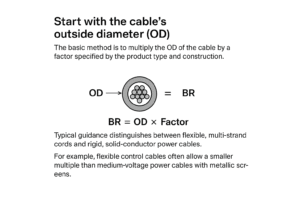
Bắt đầu với đường kính ngoài (OD) của cáp
Phương pháp cơ bản là nhân OD của dây cáp bằng một hệ số được xác định theo loại sản phẩm và cấu trúc. Hướng dẫn điển hình phân biệt giữa dây mềm nhiều lõi và cáp nguồn lõi đặc cứng. Ví dụ, cáp điều khiển mềm thường cho phép hệ số nhỏ hơn so với cáp nguồn trung thế có lớp màn chắn kim loại. Luôn kiểm tra datasheet của nhà sản xuất; nếu có nêu một khoảng (ví dụ: tĩnh so với động), hãy sử dụng giá trị nghiêm ngặt hơn trong quá trình lắp đặt để tránh uốn quá mức tại các điểm kéo.
Ứng dụng tĩnh và động
Bán kính uốn tĩnh được áp dụng khi dây cáp được lắp đặt và không di chuyển; bán kính uốn động được áp dụng khi dây cáp uốn cong trong quá trình hoạt động. Các yếu tố động thường lớn hơn vì chuyển động chu kỳ làm tăng sự mệt mỏi. Trong quá trình kéo, hãy sử dụng đường kính ròng rọc và bán kính đầu vào lớn, và hướng dẫn dây cáp để uốn cong diễn ra một cách tiến triển - không ở một cạnh sắc nét.
Ví dụ nhanh về quy trình làm việc
1) Xác định OD của dây cáp từ bảng dữ liệu. 2) Xác định hệ số nhân cho lắp đặt và cho dịch vụ (tĩnh / động). 3) Tính toán Bán Kính Uốn Tối Thiểu = OD × Hệ số nhân.. 4) Xác minh rằng các góc khay, các đường ống cong, đường kính trống và bộ kết thúc đều vượt quá bán kính này. 5) Ghi lại giá trị vào bảng phương pháp của bạn để các nhóm có thể đo tại chỗ bằng mẫu bán kính hoặc băng.
Dây cáp với bán kính uốn chật được sử dụng ở đâu?
Không gian chật hẹp mà vẫn yêu cầu độ tin cậy
Các ngành công nghiệp thường thúc đẩy việc sử dụng tủ nhỏ hơn và định tuyến dày đặc. Robot, máy công cụ, thang máy và các giàn di chuyển cần dây cáp để di chuyển qua các đường đi chật hẹp trong khi vẫn chịu đựng chuyển động liên tục. Trong các trung tâm dữ liệu và máy móc OEM, số lượng I/O cao buộc phải có các bao gói uốn nhỏ hơn ở phía sau cửa và trong các đường ống. Tại đây, việc chọn các cấu trúc được thiết kế cho các uốn chặt hơn - các dẫn điện sợi mảnh, cách điện phù hợp, chắn tốt và áo bên ngoài bền chắc - giúp giữ hiệu suất ổn định mà không cần resort đến các vỏ bọc quá cỡ.
Thực tế lắp đặt trên công trường
Trong xây dựng, các uốn tích tụ ở các góc khay, ống dẫn và gland vào. Việc sử dụng các phụ kiện được nhà máy phê duyệt (các đường cong, giá đỡ, ròng rọc) giúp ngăn ngừa các gập gãy. Đối với các dự án điện ở các thị trường đang phát triển - các điểm đến xuất khẩu chính của chúng tôi - logistics đôi khi yêu cầu sử dụng trống nhỏ hơn hoặc xử lý thủ công; việc lập kế hoạch bán kính uốn cáp song song với kích thước trống và lộ trình kéo tránh sự ứng phó trong thực địa có thể làm xước cách điện và làm void bảo hành. QRUNNING cung cấp các khuyến nghị về trống và kế hoạch kéo với mỗi lô hàng lớn để giúp đội ngũ của bạn duy trì bán kính chính xác từ việc dỡ hàng đến giai đoạn kết thúc.
Tầm quan trọng của việc tuân thủ các thông số bán kính uốn
Hậu quả về điện, cơ khí và tuân thủ
Uốn quá mức có thể làm mỏng cách điện tại cung ngoài và nén nó tại cung trong, làm thay đổi vị trí dẫn điện và tăng cường áp lực điện cục bộ - đặc biệt quan trọng ở các điện áp cao hơn. Về mặt cơ khí, việc uốn chặt lặp đi lặp lại có thể làm căng đồng hoặc nhôm, gây ra hiện tượng cứng lại và cuối cùng làm gãy dẫn điện. Đối với thiết bị đo và dữ liệu, hình học bị biến dạng làm thay đổi trở kháng, làm tăng crosstalk, và làm giảm chắn, dẫn đến các lỗi ngắt quãng khó chẩn đoán. Từ quan điểm tuân thủ, các cuộc kiểm tra tập trung vào chất lượng công việc: bỏ qua bán kính đã chỉ định có thể kích hoạt việc làm lại, chậm tiến độ, hoặc không đạt bài kiểm tra chấp nhận.
Tác động đến mua sắm và bảo hành
Thông số thường khóa bán kính tối thiểu vào đơn hàng mua. Nếu người lắp đặt vượt quá giới hạn, trách nhiệm có thể chuyển đổi giữa nhà thầu và nhà cung cấp. Là một người có kinh nghiệm Nhà cung cấp và Nhà sản xuất, chúng tôi nhúng bán kính uốn tối thiểu vào bảng dữ liệu và nhãn thùng, và chúng tôi có thể tùy chỉnh Tùy chỉnh cấu trúc—cấp bện, thiết kế lớp màn chắn hoặc hợp chất vỏ bọc—để đáp ứng các ràng buộc định tuyến của bạn mà không làm giảm tuổi thọ. Sự cân bằng này vừa bảo vệ ngân sách của bạn vừa bảo vệ uy tín dự án.
Quy chuẩn NEC đối với bán kính uốn dây là gì?
NEC tiếp cận các góc uốn như thế nào
Cáp NEC (National Electrical Code) đề cập đến hai ý tưởng có liên quan. Thứ nhất, bộ quy định này yêu cầu đủ không gian uốn dây trong tủ điện, bảng phân phối và vỏ bao che để các dây dẫn có thể đi vào và được đấu nối mà không bị biến dạng gấp khúc; các điều khoản này quy định khoảng hở tối thiểu dựa trên kích cỡ dây dẫn và định mức của thiết bị. Thứ hai, đối với cáp và dây dẫn, NEC yêu cầu người lắp đặt tuân theo bán kính uốn tối thiểu do nhà sản xuất quy định và mọi danh mục thiết bị hoặc tiêu chuẩn sản phẩm áp dụng (ví dụ, đối với phụ kiện trung thế hoặc hệ thống máng cáp). Trên thực tế, điều đó có nghĩa là: chọn kích thước vỏ bao theo các bảng của NEC, chọn đầu nối/phụ kiện tương thích với cỡ dây dẫn của bạn, và không bao giờ ép cáp uốn nhỏ hơn bán kính được in hoặc công bố bởi nhà sản xuất.
Những điểm rút ra thực tế cho nhà thầu và bên mua
Trong giai đoạn thiết kế, hãy xác minh rằng các đoạn uốn của ống luồn dây, các đoạn chuyển hướng của máng cáp và bộ kit đấu nối bạn chọn đều vượt quá bán kính uốn yêu cầu. Trong quá trình lắp đặt, hãy sử dụng con lăn hoặc puly có đường kính phù hợp và bảo vệ các cạnh bằng đế đỡ bo tròn bán kính. Khi kiểm tra, hãy chuẩn bị sẵn bảng dữ liệu để chứng minh với cơ quan có thẩm quyền rằng các đoạn uốn của bạn đáp ứng cả NEC’quy định về không gian của ’s và thông số bán kính uốn của sản phẩm. QRUNNING có thể cung cấp thư xác nhận tuân thủ và dữ liệu thử nghiệm theo yêu cầu để đơn giản hóa quá trình phê duyệt.
Tìm nguồn cung cấp cáp đáp ứng yêu cầu bán kính uốn
Vì sao QRUNNING phù hợp với các dự án tại Việt Nam và hơn thế nữa
Là một doanh nghiệp B2B Nhà phân phối và Nhà sản xuất với hơn 30 năm kinh nghiệm, chúng tôi cung cấp nguồn điện lên đến 500 kV dây cáp với kiểm soát chất lượng đã được kiểm toán, chứng nhận xác thực và ETD/ETA đáng tin cậy. 10 dây chuyền của nhà máy chúng tôi đáp ứng các đơn hàng lớn với thời gian giao hàng ổn định, và đội ngũ kỹ sư của chúng tôi giúp bạn cân bằng bán kính uốn, khả năng tải dòng và ngân sách. Cần lộ trình chặt hơn? Hãy hỏi về Tùy chỉnh các cấp bện, tùy chọn giáp và vật liệu vỏ bọc để đạt được mục tiêu của bạn bán kính uốn cáp mà không làm giảm tuổi thọ.
Tóm tắt
Hãy tuân thủ bán kính uốn cáp để bảo vệ hiệu suất, vượt qua kiểm định và tránh thời gian ngừng hoạt động. Chọn thiết kế phù hợp với tuyến đi của bạn, làm theo NEC và giới hạn của nhà sản xuất, và hợp tác với những người đã được chứng minh Nhà cung cấp để có được kết quả đáng tin cậy.